

Benefits of Buying Australian Made Jewellery
Table of Contents
- Why Australian Made Jewellery Stands Apart
- Supporting Local Artisans and the Local Economy
- Ethical Jewellery Sourcing Australia: Transparency From Start to Finish
- Benefits of Small-Batch Jewellery Production
- Australian Made Certification Requirements and What They Mean
- Quality Assurance, Craftsmanship, and Long-Term Value
- Investment and Resale Value of Handcrafted Pieces
- Conclusion
- Frequently Asked Questions
Last Updated: September 19, 2026
Why Australian Made Jewellery Stands Apart
When you choose handcrafted jewellery made in Australia, you're not simply purchasing an accessory. You're investing in a piece created with intention, crafted by artisans who pour skill and artistry into every detail. The benefits of buying Australian made jewellery extend far beyond aesthetics, they touch on ethics, quality, environmental responsibility, and genuine connection to the maker.
Australian made jewellery represents a deliberate departure from mass production. Each piece is thoughtfully designed and individually created, meaning you own something genuinely unique. There's no assembly line, no thousands of identical copies sitting in warehouses. Instead, small-batch production ensures that your jewellery reflects the maker's vision and your personal style simultaneously.
The craftsmanship embedded in handcrafted pieces means they're built to last. Unlike factory-produced items designed for planned obsolescence, Australian made jewellery is made to be worn every day and cherished forever. This longevity translates to real value over time, both emotionally and economically.
Supporting Local Artisans and the Local Economy
When you buy Australian made jewellery, your money flows directly to independent artisans and small businesses. This isn't theoretical, it's a measurable impact on local job creation and economic vitality. Artisans who handcraft jewellery employ support staff, source materials locally, and reinvest earnings into their communities.
Small-batch jewellery production creates genuine employment. A jeweller might work alone or with a small team, but each piece represents hours of skilled labour that couldn't be outsourced to an automated factory. Supporting these artisans means protecting traditional craftsmanship skills that might otherwise disappear as manufacturing consolidates globally.
The local economy benefits extend beyond the jeweller's studio. Ethical sourcing practices mean purchasing from local gemstone suppliers, metalworkers, and material providers. This interconnected network of small businesses strengthens regional economies in ways that importing mass-produced goods never could.
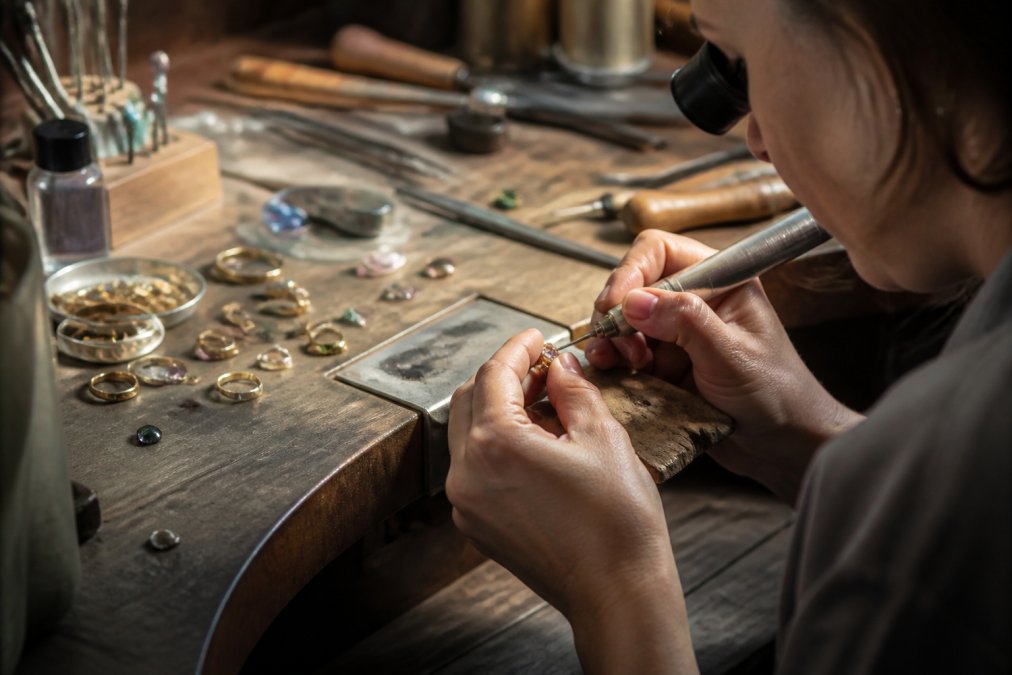
Ethical Jewellery Sourcing Australia: Transparency From Start to Finish
Ethical jewellery sourcing begins with knowing where materials originate. Australian made jewellery producers who prioritise transparency can tell you exactly which gemstones they've selected, where those stones were sourced, and how they were ethically obtained. This supply chain transparency builds consumer trust in ways that anonymous mass production never can.
Precious metals sourcing matters equally. Responsible Australian jewellers source gold, silver, and platinum through documented channels that verify ethical mining practices. This contrasts sharply with global supply chains where metal provenance becomes impossible to trace once it enters international markets.
The commitment to ethical practices extends to labour standards. Australian artisans work under local employment laws and choose their working conditions, they're not competing with factory workers earning subsistence wages. This means every piece you purchase supports fair labour practices by default.
Transparency from start to finish means you can ask questions and receive genuine answers. Where did this gemstone come from? What purity is the gold? How long did this piece take to create? Artisans who practice ethical sourcing welcome these conversations because their work stands up to scrutiny.
Benefits of Small-Batch Jewellery Production
Small-batch production creates scarcity and individuality that mass manufacturing cannot replicate. When a jeweller creates only a handful of pieces in a particular design, each one becomes genuinely rare. You're not wearing something thousands of other people own, you're wearing a piece that exists in limited quantities.
This production approach also allows for customisation and bespoke design work. Unlike mass-produced jewellery where your options are limited to existing stock, small-batch artisans can work with you to create something tailored to your vision. The flexibility inherent in handcrafted production means your piece can reflect your personal aesthetic in ways off-the-shelf jewellery never will.
Lead times differ from mass production, but this reflects the reality of quality craftsmanship. Rather than instant gratification, you're participating in the creative process. The jeweller takes time to source the right gemstones, design thoughtfully, and execute with precision. This intentional pace produces superior results.
Quality assurance in small-batch production is inherently superior because the maker stands behind every piece. There's no corporate buffer, no customer service department, the artisan who created your jewellery is the person responsible for its quality. This accountability drives craftsmanship standards that factories struggle to maintain.
Australian Made Certification Requirements and What They Mean
Australian Made certification carries legal weight. Products bearing the Australian Made logo must meet strict criteria: they must be substantially transformed in Australia, with at least 50 per cent local content by value. This isn't a marketing claim, it's a legally enforceable standard verified by the Australian Competition and Consumer Commission.
For jewellery specifically, Australian Made certification means the design, craftsmanship, and assembly happened here. It doesn't necessarily mean every raw material originated locally (gemstones and precious metals are often imported), but it guarantees that the transformation from raw materials into finished jewellery occurred through Australian labour and expertise.
How to Identify Genuine Australian Made Jewellery
The Australian Made logo itself is your first verification point. Look for the distinctive green and gold kangaroo mark on product packaging, certificates of authenticity, or the jeweller's website. This mark is registered and legally protected; unauthorised use carries penalties. If a jeweller claims Australian made status but displays no logo or certification, ask for documentation. Legitimate makers maintain records of their Australian Made registration and can provide proof on request.
Beyond the logo, examine hallmarking. Australian jewellery must carry hallmarks indicating metal purity (375 for 9-carat gold, 585 for 14-carat, 750 for 18-carat, and equivalent standards for silver and platinum). These marks are stamped into the metal itself and cannot be removed or counterfeited without damaging the piece. A reputable jeweller can explain exactly what each hallmark means and why it matters. If a piece claims to be solid gold but carries no hallmark, it's either not Australian made or not genuine precious metal.
Gemstone documentation adds another layer of authenticity. Ask whether gemstones come with certificates from recognised laboratories such as the Gemmological Association of Australia or international bodies like the Gemological Institute of America. For sapphires, rubies, and other coloured stones, certification confirms whether the stone is natural, treated, or synthetic, information that directly affects both value and longevity. Australian-sourced sapphires, in particular, can be documented through supplier records; a jeweller should be able to trace the origin of significant stones.
Direct communication with the maker is itself a verification tool.
Quality Assurance, Craftsmanship, and Long-Term Value
Handcrafted Australian made jewellery is built for longevity in ways mass production simply cannot match. Each piece receives individual attention during creation, the jeweller inspects their work at every stage, adjusting and refining until it meets their standards. This hands-on quality assurance produces durability that inspires confidence.
Maintenance, Repair, and Local Accessibility
One of the most overlooked advantages of buying from local makers is the ability to access repairs and maintenance directly from the person who created your piece. Unlike mass-produced jewellery, where repairs require shipping to distant service centres or replacement through retail chains, handcrafted pieces can be serviced locally. This accessibility translates to real cost savings and faster turnaround times.
Investment and Resale Value of Handcrafted Pieces
Handcrafted Australian made jewellery holds resale value in ways mass-produced alternatives struggle to match. Unique, artisan-created pieces appeal to collectors and jewellery enthusiasts who understand craftsmanship quality. The scarcity inherent in small-batch production supports resale demand.
Conclusion
The choice to buy Australian made jewellery reflects a commitment to quality, ethics, and supporting artisans who create with intention. When you select handcrafted pieces from makers like Choux Fleur Designs, you're choosing small-batch gemstone jewellery designed to be worn every day and cherished forever. Each one-of-a-kind piece combines superior craftsmanship and genuine individuality, qualities that mass production cannot deliver.
Frequently Asked Questions
How can I verify if a jewellery piece is genuinely made in Australia?
Look for the official Australian Made logo, which certifies that the jewellery has been substantially transformed in Australia. Reputable makers provide documentation of their manufacturing process, gemstone sourcing, and materials. Ask sellers directly about their production location and request details about where components originate. Handcrafted Australian made jewellery often comes with certificates of authenticity, hallmarking details, and information about the artisan or studio behind the piece.
What does Australian Made certification actually require?
The Australian Made certification requires that the jewellery be substantially transformed in Australia, meaning the design, assembly, and finishing are completed locally. For jewellery to qualify, the substantial transformation must occur here, and content sourced from overseas must be clearly documented. The certification process involves audits and compliance checks to ensure standards are met. This differs from 'product of Australia,' which has less stringent requirements.
Is Australian made jewellery more sustainable than imported alternatives?
Australian made jewellery typically has a smaller carbon footprint because it eliminates lengthy international shipping and reduces supply chain complexity. Local production means shorter lead times and support for manufacturing practices common among independent Australian artisans. Many local makers prioritise ethical gemstone sourcing and use recycled precious metals, whereas mass-produced imports often involve unknown supply chains. However, sustainability depends on individual maker practices, ask about their sourcing and materials.
Why is handcrafted Australian made jewellery more expensive than mass-produced pieces?
Handcrafted pieces cost more because they involve skilled labour, quality materials, and individual attention to design and construction. Mass production relies on economies of scale and lower labour costs overseas. Australian made jewellery supports fair wages, maintains higher manufacturing standards, and uses materials with verified sourcing. Each piece is often unique or small-batch, meaning no two are identical. The higher price reflects genuine craftsmanship, durability, and investment value, pieces designed to last decades rather than seasons.