

How to Tell if Gemstones Are Authentic
Table of Contents
- Visual Inspection for Colour and Clarity
- The Breath Test and Fogging Method
- Water Drop Test for Surface Tension
- How to Test Gemstone Hardness at Home
- Identifying Inclusions and Internal Flaws
- Common Gemstone Treatments and Enhancements
- Gemstone Certification and Professional Appraisal
- Why Authenticity Matters for Your Gemstone Jewellery
- Frequently Asked Questions
Last Updated: September 18, 2026
Visual Inspection for Colour and Clarity
The first step in learning how to tell if gemstones are authentic is to examine colour distribution. Natural gemstones show uneven colour with patches of deeper and lighter tones, a strong sign of authenticity that synthetics rarely match.
Real gemstones contain inclusions, tiny particles, fractures, or materials trapped during formation. These aren't flaws; they're proof of authenticity. Synthetic stones and imitations tend to be too perfect, with uniform clarity.
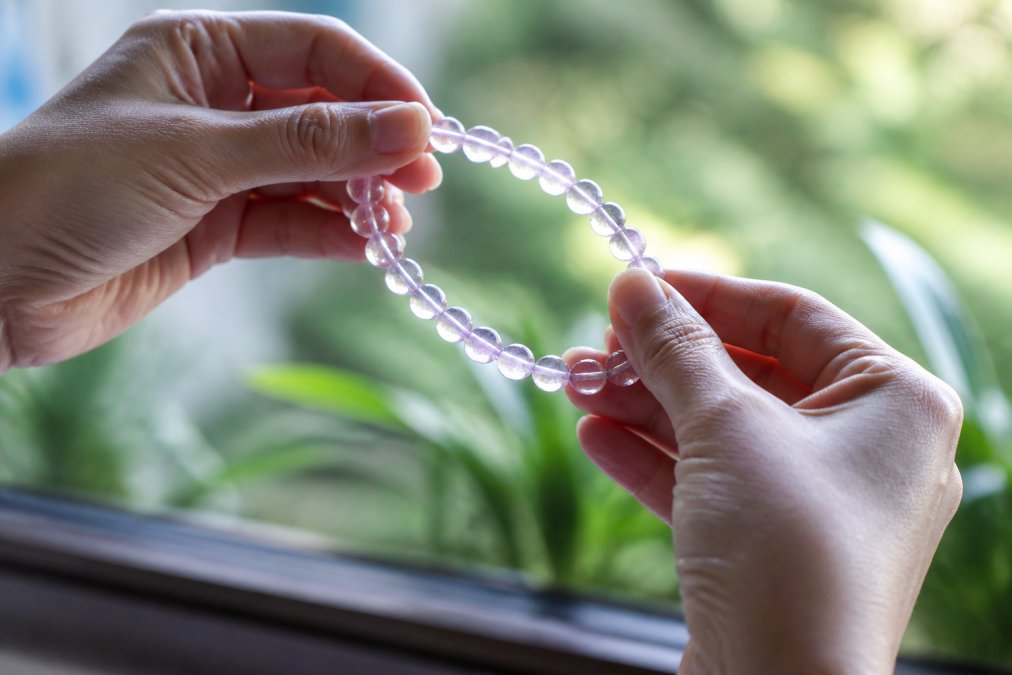
Hold the stone up to natural light and tilt it slowly. Genuine gemstones display natural colour variation that shifts depending on angle and light source, like the moss agate and jade in Choux Fleur Designs Luntian bracelet.

Use a jeweller's loupe to see details invisible to the naked eye: tiny fractures, colour zoning, and mineral inclusions. Imitation glass or cubic zirconia won't show these features.
The Breath Test and Fogging Method
Exhale warm breath onto the gemstone surface. A natural stone will fog up briefly, then clear within 2-3 seconds because genuine gemstones conduct heat differently than fakes.
Imitation stones and glass fog up and stay fogged longer because they don't disperse heat like real gemstones. Fogging lasting more than a few seconds suggests a synthetic or imitation.
This test works best with loose stones or individual beads, such as those in Choux Fleur Designs Banaag bracelet.

Combine the breath test with other checks, as heat-treated stones may behave differently than untreated ones.
Water Drop Test for Surface Tension
Place a small drop of water on the gemstone surface. On genuine gemstones, the water beads up into a rounded shape because of specific surface tension properties.
On glass or imitations, water spreads flat across the surface instead of beading up, revealing whether you have authentic material or a copy.
The water drop test works best for polished gemstones. Clean the stone first with a soft cloth so dirt or oils don't interfere.
Combined with the breath test, the water drop test provides two independent checks on the stone's thermal and surface properties.
How to Test Gemstone Hardness at Home
Hardness is reliable for identifying gemstones but often misunderstood. The Mohs hardness scale ranks minerals from 1 (softest) to 10 (hardest), with most gemstones between 5 and 9. Hardness testing narrows down possibilities but cannot identify a stone alone.
Genuine gemstones have consistent hardness within their type. Imitation materials like glass, cubic zirconia, and plastic have different hardness values. A fake emerald made from green glass scratches far more easily than a real emerald, a red flag.
How to conduct a hardness test at home:
You can estimate hardness using everyday items as reference points:
- Fingernail (2.5 on Mohs scale): If your fingernail scratches the stone, it's very soft, likely below 3. Stones this soft include talc, selenite, and some forms of calcite. These are rarely used in jewellery because they're too fragile for daily wear.
- Copper penny (3.5 on Mohs scale): Soft gemstones like fluorite and some types of tourmaline fall here. They're durable enough for pendants or earrings but risky for rings or bracelets.
- Glass or ceramic (5.5 on Mohs scale): Opal, turquoise, and lapis lazuli sit around this range. Many imitation stones also fall here, which is why this test works well for distinguishing real from fake.
- Steel (6.5 on Mohs scale): Jade, moonstone, and some varieties of tourmaline reach this hardness. A steel tool should not scratch these stones easily.
- Quartz (7 on Mohs scale): Amethyst, citrine, and clear quartz all measure around 7. They resist scratching from steel and should only scratch with difficulty.
Testing technique:
Choose an inconspicuous spot on the stone. Use light, controlled pressure and let the testing material do the work. Genuine gemstones won't scratch easily; imitations often will.
Start with your fingernail. If it scratches, the stone is very soft. If not, move to the penny and continue up the scale until scratching begins, revealing the approximate hardness range.
Interpreting your results:
Knowing the expected hardness of your gemstone type is crucial. If you're testing a piece you believe contains amethyst, expect it to resist scratching from glass and steel. If it scratches easily from a penny, it's likely not genuine amethyst, it could be glass or another imitation.
Hardness testing has limits: treatments can affect results, and different gemstones may share the same hardness. Use it as part of a larger evaluation.
Understanding hardness guides care: stones below 7 are vulnerable to scratching and should be stored separately. Opals need gentle handling and avoid heat or dry environments. Diamonds are nearly scratch-proof but can chip if struck hard.
Use hardness testing as part of a larger evaluation. Combine it with visual inspection, the breath test, and professional magnification for a comprehensive assessment.
Identifying Inclusions and Internal Flaws
Inclusions are signatures of authenticity in natural gemstones, formed as the stone crystallises around other minerals and materials deep in the earth.
Look for characteristic inclusions: feather-like fractures, colour banding, tiny crystals, and gas bubbles. Each gemstone type has distinctive patterns that help you spot fakes.
Synthetic stones and imitations lack natural signatures. Lab-created gemstones are often too clean with few inclusions. Glass bubbles appear round and uniform, while natural inclusions vary widely in shape.
Use magnification to see inclusions clearly, a jeweller's loupe or smartphone macro mode works well. Examine from different angles to confirm inclusions match the stone type.
Common Gemstone Treatments and Enhancements
Understanding the difference between treatments, lab-grown stones, and imitations is essential for informed purchases and fair value.
Treatments vs. authenticity:
A treatment is a process applied to a natural gemstone after mining and cutting. Treatments are common, legal, and widely accepted, but must be disclosed. A treated stone is still authentic.
Common treatments include:
- Heat treatment: The most widespread treatment. Heat can deepen colour, improve clarity, or shift hue. A ruby that's been heat-treated is still a ruby, still authentic, but its value may be lower than an untreated stone of similar appearance. Heat treatment is stable and permanent; the stone won't revert to its original appearance.
- Irradiation: Exposure to radiation can intensify colour in gemstones like tourmaline, topaz, and diamond. The colour is permanent and the stone remains authentic, but irradiated stones must be disclosed at point of sale.
- Oiling and resin filling: Surface fractures are filled with oil or resin to improve clarity and appearance. This treatment is common in emeralds. It's reversible, the filling can wear away over time with exposure to heat, harsh chemicals, or aggressive cleaning, so stones treated this way require careful maintenance.
- Coating: A thin layer of material is applied to the stone's surface to enhance colour or add optical effects. Coatings are not permanent and can wear away with wear and cleaning, making them less desirable than other treatments.
Lab-grown gemstones are chemically, physically, and optically identical to natural gemstones, created in laboratories under controlled conditions. A lab-grown ruby is a real ruby with the same crystal structure, hardness, and refractive index as a mined ruby. They're authentic gemstones, significantly cheaper because production is faster and more controlled, and increasingly popular for ethical and environmental reasons.
Synthetic gemstones are created through processes that don't exist in nature, like some synthetic opals. They're real gemstones with genuine properties but created through non-natural processes, authentic but not natural.
Imitation gemstones are fakes made from materials that mimic appearance but lack physical and optical properties. Glass, cubic zirconia, and plastic are common. An imitation emerald won't have the same hardness, refractive index, or durability, they scratch easily, cloud over time, and lose lustre.
Composite stones: Doublets and triplets are made by gluing two or three pieces together.
Gemstone Certification and Professional Appraisal
For valuable gemstones, professional certification provides peace of mind. A certified gemologist examines the stone, checks for treatments, identifies the type, assesses quality, and provides written documentation.
Why Authenticity Matters for Your Gemstone Jewellery
Authentic gemstones last; imitations fade, crack, and lose lustre. For pieces you plan to wear daily and keep forever, authenticity is essential.
| Test Method | What to Look For | Time Required | Best For |
|---|---|---|---|
| Visual inspection | Uneven colour, natural inclusions | 2-3 minutes | All gemstones |
| Breath test | Quick fog that clears fast | 30 seconds | Loose stones, individual beads |
| Water drop test | Water beads up on surface | 1 minute | Polished stones |
| Hardness test | Resistance to scratching | 5 minutes | Identifying stone type |
| Loupe examination | Inclusion patterns, fractures | 5-10 minutes | Detailed authenticity check |
Australian Gemmological Association standards and gemologist directory
Consumer protection guidance on gemstone purchases and authenticity claims
Mohs hardness scale and gemstone durability information
Frequently Asked Questions
Can you tell if a gemstone is real with a magnifying glass?
Yes, a jeweller's loupe (10x magnification) reveals details invisible to the naked eye. Real gemstones show natural inclusions, growth patterns, and internal flaws that synthetic alternatives lack. Look for colour zoning, feathers, and tiny mineral particles trapped inside. Imitation glass and cubic zirconia typically appear too perfect or show different internal structures. A magnifying glass won't definitively prove authenticity alone, but it's an essential first step before professional certification.
What are the most common signs of a fake gemstone?
Fake gemstones often display perfect, uniform colour with no variation, whereas natural stones show natural colour distribution. Synthetic simulants like cubic zirconia fog quickly on the breath test and lack the refractive index of genuine gemstones. Imitation glass feels warmer to the touch and scratches easily. Lab-created stones are real gemstones chemically but lack natural inclusions. Check for surface scratches, uneven facet edges, and suspicious weight, authentic gemstones have specific gravity that matches their type.
How do I know if my gemstone jewellery is genuine?
Combine multiple tests: visual inspection under magnification, the breath test, water drop test, and hardness testing. Check for gemological certification from recognised labs. Natural gemstones show characteristic inclusions and internal features; lab-created stones are chemically identical but lack these markers. Feel the weight and thermal conductivity, genuine stones conduct heat differently than glass or plastic. If you've invested in a significant piece, professional appraisal provides definitive verification and documentation of authenticity.
Are synthetic gemstones considered fake?
Synthetic gemstones are not technically 'fake', they're real gemstones created in laboratories rather than formed in nature. They have identical chemical composition and hardness to natural stones but lack natural inclusions and growth patterns. Lab-created diamonds, rubies, and sapphires are chemically authentic but must be disclosed as synthetic. Simulants (like cubic zirconia or imitation glass) are different: they mimic a gemstone's appearance but have entirely different properties. Ethical sourcing and transparency matter.