

Small-Batch vs Mass-Produced Jewellery: Quality & Value
Table of Contents
- What Defines Mass-Produced and Small-Batch Jewellery
- Craftsmanship and Quality Control: Where They Diverge
- How to Identify Quality Gemstone Jewellery
- Why Choose Small-Batch Gemstone Jewellery
- Benefits of Handmade Gemstone Jewellery
- Price, Durability, and Long-Term Value
- Supply Chain Transparency and Ethical Sourcing
- Conclusion
- Frequently Asked Questions
Last Updated: September 22, 2026
What Defines Mass-Produced and Small-Batch Jewellery
Mass-produced jewellery and small batch jewellery represent fundamentally different approaches to design and manufacturing. At Choux Fleur Designs, we understand that the distinction goes far beyond volume, it shapes every aspect of quality, authenticity, and longevity.
Mass-produced jewellery is manufactured at scale using standardised moulds, templates, and assembly lines. Thousands of identical pieces roll off production runs, with each item following the same specifications and design. The focus is efficiency: how quickly can a piece move through casting, plating, stone-setting, and finishing? Speed matters more than individual attention.
Small batch jewellery, by contrast, is created in limited quantities, often fewer than 50 pieces per design, sometimes just one-of-a-kind. Each piece receives individual consideration during design, material selection, and handcrafted assembly. Artisans make deliberate choices about stone placement, colour balance, and finishing details that mass production cannot accommodate.

The real difference isn't just the number made. It's the philosophy behind them. Mass production prioritises consistency and cost. Small batch jewellery prioritises intention and craft.
| Aspect | Mass-Produced | Small-Batch |
|---|---|---|
| Production Volume | Thousands per design | Fewer than 50 per design |
| Design Process | Template-based | Individual, intentional |
| Quality Control | Automated checks | Hands-on inspection |
| Customisation | Minimal | High |
| Lead Time | Weeks | Days to weeks |
| Price Range | £20-£150 | £70-£200+ |
Craftsmanship and Quality Control: Where They Diverge
The difference in craftsmanship between mass-produced and small batch jewellery shows itself in how pieces are made and inspected. Mass production relies on machinery and standardised processes that prioritise speed. Quality control happens through automated testing: does the clasp close? Is the plating thickness within tolerance? But no one examines whether the gemstones are truly complementary in colour, or whether the proportions feel balanced to the eye.
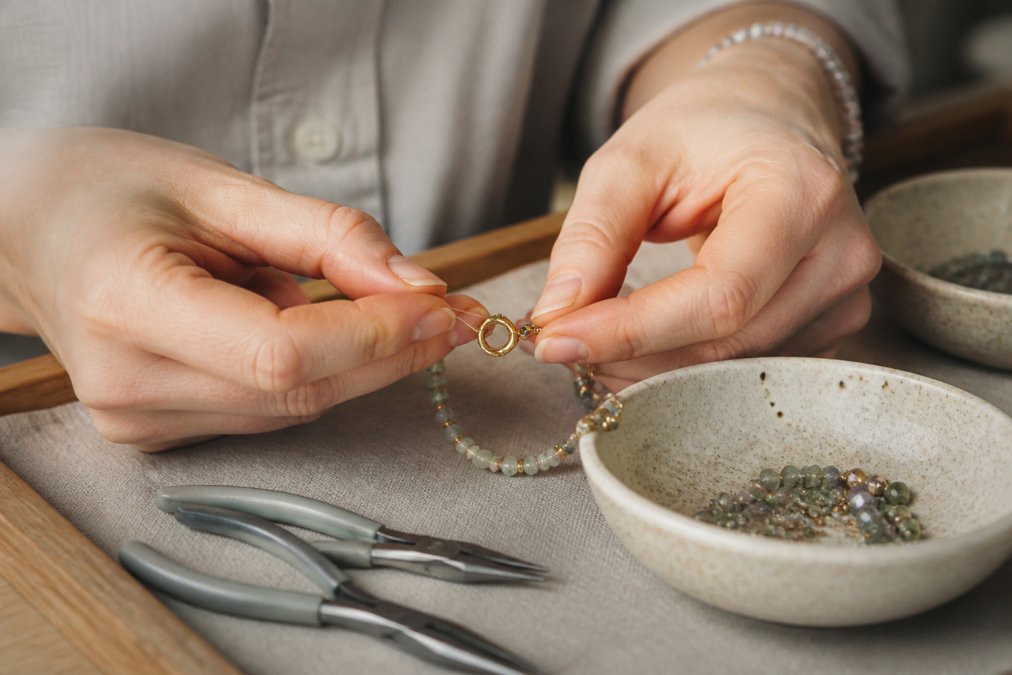
Small-batch artisans work differently. They hand-select each stone, examining colour, tone, and translucency before committing it to a piece. They hand-string or hand-set each element, which means they can adjust spacing, tension, and alignment as they go. They finish each piece individually, polishing, buffing, and checking for flaws that a machine might miss.
This hands-on approach catches problems early. A stone with a hidden fracture gets noticed before it's set. A clasp that doesn't sit quite right gets adjusted. A colour combination that looked good on paper but feels off in person gets reconsidered. Mass production can't make these judgments, the assembly line moves forward regardless.
The result is durability. Handcrafted pieces tend to last longer because they're built with care and attention to how the piece will actually be worn. Gemstones are secured properly. Clasps are tested under real-world conditions. Gold plating is applied with precision, not just thickness.
How to Identify Quality Gemstone Jewellery
Identifying quality gemstone jewellery requires knowing what to look for. Most people assume that price alone signals quality, but that's misleading.
Start with the gemstones themselves. Genuine gemstones have character, slight variations in colour, natural inclusions, and subtle flaws that prove authenticity. Mass-produced pieces often use treated or synthetic stones because they're cheaper and more uniform. Ask whether the stones are natural or lab-created. Natural stones command higher prices, but they also age better and hold their beauty longer.
Next, examine the metal findings, the clasps, spacers, and connectors. Quality small-batch jewellery often uses 14K gold or sterling silver. Gold plating can wear away with daily wear, leading to tarnishing or discolouration of the base metal underneath. 14K gold is durable enough for everyday wear without degrading.
Look at the construction. Hand-strung necklaces should have even spacing between beads. The clasp should feel smooth and secure, not stiff or loose. Gemstones should sit flush in their settings with no wiggling. These details signal that someone inspected the piece before it left the studio.
Ask about sourcing and materials. Reputable makers can tell you where their stones come from, how they're treated, and why they chose specific materials. If a maker can't answer these questions, that's a red flag. Transparency indicates confidence in the product.
Why Choose Small-Batch Gemstone Jewellery
Choosing small-batch gemstone jewellery means investing in pieces that reflect your personal style rather than following a trend. Mass-produced jewellery is designed for the broadest possible market, safe colours, predictable designs, nothing too bold or unusual. The result is jewellery that looks like everyone else's.
Small-batch pieces are different. They're created by artisans with a specific vision. Each necklace, bracelet, or pair of earrings tells a story through its colour combinations, material choices, and proportions. When you wear a small-batch piece, you're wearing something intentional, something that was made because the maker believed in it, not because a marketing algorithm predicted it would sell.
This uniqueness matters psychologically. Wearing something one-of-a-kind changes how you feel about yourself. You're not just wearing jewellery; you're wearing a piece of art that no one else owns. That confidence translates into how you carry yourself.
There's also the ethical dimension. Small-batch makers are typically independent artists or small studios. Your purchase supports their livelihood directly. You know where your money goes. With mass production, profit flows to shareholders and executives; the artisans who actually make the pieces earn minimal wages.
For gift-giving, small-batch jewellery solves a real problem: how do you give something meaningful to someone who already has everything? A mass-produced necklace feels generic. A small-batch piece feels considered and personal. It becomes a modern heirloom, something the recipient will treasure and potentially pass down.
Benefits of Handmade Gemstone Jewellery
The benefits of handmade gemstone jewellery extend beyond aesthetics. They touch on durability, sustainability, and emotional value.
Durability is the first benefit. Handmade pieces are built to last because the maker's reputation depends on them lasting. If a clasp fails after three months, the maker hears about it. If a stone falls out, the maker has to fix it. This accountability drives quality. Mass producers have no such incentive, you've already paid, and returns are rare.
Handmade jewellery also ages beautifully. Natural gemstones develop a patina over time. Gold gains character. The piece becomes more meaningful as it accumulates memories of being worn. Mass-produced pieces often look tired after a year or two; the plating flakes, stones become cloudy, and the whole thing feels cheap. Handmade pieces look better at five years than they did at one.
Sustainability is another advantage. Small-batch production uses fewer resources because it operates at smaller scale. There's less waste, less excess inventory, and less pressure to cut corners. Artisans often source materials more thoughtfully, choosing recycled metals or ethically sourced gemstones. Mass production prioritises volume, which means higher environmental impact.
There's also the emotional benefit. Knowing that a piece was made by hand, by someone who cares about the craft, changes how you relate to it. You're not wearing a commodity; you're wearing human skill and intention. That matters when you're spending money on something you'll wear every day.
Price, Durability, and Long-Term Value
Price is where small-batch and mass-produced jewellery diverge most visibly. Small-batch pieces may cost more upfront. Mass-produced equivalents might cost less. The difference feels significant in the moment.
But long-term value tells a different story. A small-batch necklace worn daily for many years can offer excellent value. A mass-produced necklace that needs replacing more frequently may cost more over time.
Durability is the reason. Handcrafted pieces withstand daily wear because they're built properly.
Supply Chain Transparency and Ethical Sourcing
Supply chain transparency is where small-batch jewellery has a decisive advantage over mass production. When you buy from a small-batch maker, you can trace where materials come from and how the piece was made. You might even know the artisan's name and story.
Australian Consumer Law on product durability and quality
Responsible Jewellery Council standards for ethical sourcing
Australian Sustainable Fashion Council guidance on artisan production
Conclusion
The choice between small-batch and mass-produced jewellery isn't really about price. It's about what you value: uniqueness or uniformity, durability or disposability, intention or convenience.
Frequently Asked Questions
What are the primary differences between small-batch and mass-produced jewellery?
Small-batch jewellery is handcrafted in limited quantities, often one-of-a-kind, with artisans controlling each stage from material selection to final assembly. Mass-produced jewellery uses automated machinery to create thousands of identical pieces quickly. Small-batch pieces emphasise unique design, material quality, and individual character, whilst mass production prioritises volume and cost efficiency. This fundamental difference affects durability, design integrity, and the emotional connection you have to the piece.
How does the quality of small-batch gemstone jewellery compare to mass-market alternatives?
Small-batch gemstone jewellery typically uses genuine, carefully selected stones and precious metals like 14K gold. Handcrafted pieces receive individual quality control at every step, reducing manufacturing shortcuts and defects. The casting, setting, and finishing are executed with precision rather than speed. This translates to pieces that withstand daily wear without loosening stones or tarnishing.
What makes a piece of jewellery a 'modern heirloom'?
A modern heirloom is a piece designed to last generations, combining timeless craftsmanship with contemporary aesthetics. It features durable materials, secure settings, and artistic integrity that transcends fleeting trends. Small-batch gemstone jewellery achieves this through thoughtful design, quality gemstones, and precious metal construction. Unlike fast-fashion accessories meant to be discarded, modern heirlooms are made to be worn daily, cherished for decades, and passed down. The uniqueness of a one-of-a-kind piece also ensures it holds sentimental and resale value over time.
Why is small-batch jewellery considered more sustainable than mass-produced alternatives?
Small-batch production creates less waste because artisans design intentionally rather than manufacturing excess inventory destined for landfills. Ethical sourcing of gemstones and metals is easier to verify in small operations, reducing environmental footprint and supporting responsible mining practices. The longevity of handcrafted pieces means they're worn for years rather than seasons, reducing the demand for constant replacement. By choosing small-batch jewellery, you're supporting slow fashion principles and reducing the environmental impact of the jewellery industry's mass-market cycle.