

What Is a Modern Heirloom Piece? A 2026 Guide
Table of Contents
- What Is a Modern Heirloom Piece? The 2026 Definition
- 6 Characteristics That Define Modern Heirloom Status
- The Benefits of Small Batch Gemstone Jewellery
- How to Identify Quality Handcrafted Jewellery
- Caring for Gemstone Jewellery So It Lasts Generations
- How to Build an Heirloom Collection on Any Budget
- Frequently Asked Questions
Last Updated: September 14, 2026
What Is a Modern Heirloom Piece? The 2026 Definition
A modern heirloom piece is a contemporary object made with such quality, intention and durability that it can be worn daily and passed down for generations. Unlike jewellery locked in a safe, a modern heirloom is designed for living: artisan-crafted, often one-of-a-kind, and built to gather patina rather than lose value.
That definition flips the old inheritance model on its head. Heirlooms used to be things you received, not things you chose. Now, women in their thirties and forties deliberately buy pieces with heirloom potential for themselves. This guide from Choux Fleur Designs, whose small-batch gemstone jewellery is handcrafted in Australia, breaks down how to spot these pieces, how to build a collection on any budget, and how to care for them.
How a Modern Heirloom Differs from a Traditional One
Traditional heirlooms were defined by provenance: a grandmother's ring, a christening gown, a piece tied to a family story. Their value was inherited along with the object.
Modern heirlooms are defined by intention. You select them, wear them, and decide they will matter. Three things separate the two:
- Ownership: chosen by the wearer rather than passed down passively
- Use: designed for everyday wear, not ceremonial storage
- Design: judged on craftsmanship and material quality, not just age
The result is design heritage in the making: you are not inheriting history, you are starting it.
6 Characteristics That Define Modern Heirloom Status
Six markers separate a genuine modern heirloom from a purchase you will tire of in two years. Check every piece against this list before you commit.
- Material quality: genuine gemstones, natural materials, components that do not degrade
- Quality construction: secure settings, smooth finishes, no sharp edges or loose threads
- Timeless design: shapes and palettes that will not read as dated in a decade
- Artisan-crafted or bespoke: evidence of a human hand, not a production line
- Durability: hardware and stringing that survive daily wear
- Emotional resonance: a piece you reach for constantly, not one you admire from a distance
Notice what is missing: brand logos and trend cycles. Heirloom status comes from the object, not the label.
Material Quality and Durability
Genuine gemstones, hand-faceted beads and solid findings age gracefully. Plated base metals and dyed plastics flake, fade and discolour within a season or two (Gemstones and the Artist’s Palette - Natural Mineral Colouring of Paint Pigments).
Run your eye along the stringing or setting. A piece built to last develops patina rather than damage, the difference between a necklace you replace and one you repair.
Timeless Design and Aesthetic Longevity
Timeless design is not boring design. It means the piece is not anchored to a single season's palette or silhouette.
Colour, proportion and contrast do the heavy lifting. A necklace balancing rich textures against warm finishes, or deep stones against soft neutrals, will still look considered in twenty years. Trend-driven pieces date fast; balanced ones do not.
The Benefits of Small Batch Gemstone Jewellery
Small batch production is the strongest predictor of heirloom potential. A limited run lets a maker slow down, select better stones and finish each piece properly. Mass production optimises for volume, and quality is the first casualty.
The benefits of small batch gemstone jewellery go beyond scarcity:
- Better stone selection: a maker handling fifty pieces can reject flawed stones; a factory handling fifty thousand cannot
- Consistency of finish: each clasp, knot and setting gets individual attention
- Traceability: you can usually ask exactly where a stone came from and who assembled it
- Individuality: no repetition means no one else owns your piece
There is also a sustainability argument. Slow design uses fewer resources per piece and keeps jewellery in circulation for decades. A piece worn for thirty years has a fraction of the environmental cost of thirty pieces worn for one year each.
How to Identify Quality Handcrafted Jewellery
Quality handcrafted jewellery shows specific, checkable signs of human workmanship. You do not need a jeweller's loupe, just know where to look, what a shortcut looks like, and why each flaw matters.
Start with what a machine does perfectly and a rushed maker does not, then look for the small irregularities that prove a person was involved. Learning how to identify quality handcrafted jewellery is a skill you will use for every purchase from here on.
What to Look For in Construction and Finish
Work through this checklist before you buy, whether in person or from product photographs:
- Consistent bead sizes and spacing: irregular gaps suggest rushed stringing and uneven tension, which is where a strand usually fails first
- Smooth drill holes: rough edges act like a saw against the stringing thread every time the bead moves, so holes that feel gritty are a slow-motion break
- Secure, well-finished clasp: it should open smoothly and close firmly, with no sharp edges and no play in the mechanism
- Clean joins: no visible glue, no excess wire, no kinked links, glue is the tell of a maker who could not finish the job properly
- Weight in the hand: genuine stones have heft; plastic imitations feel hollow and warm too quickly against the skin
- Colour depth: natural stones shift subtly in different light rather than staying flat, and they rarely match each other exactly
Why Each Check Matters
A checklist is only useful if you understand the failure it prevents. Most jewellery does not break from one dramatic event; it breaks because a small weakness is repeated thousands of times.
- Spacing and tension: uneven gaps mean the stringing is tighter in some sections than others. The tight sections take more strain, and that is where the strand snaps.
- Drill holes: a rough hole is an abrasive edge. Every time the bead slides, it shaves a little fibre off the thread. Over years, that adds up.
- Clasps: a clasp with play will eventually fail to hold. A sharp edge will fray the thread where it attaches, which is the second most common break point after the drill hole.
- Weight and colour: these are the fastest ways to spot imitation. If a stone feels light or its colour is identical to the bead beside it, it is probably glass, resin or dyed plastic.
How to Assess a Piece You Cannot Hold
Most purchases now happen through a screen, removing your two best tools: weight and touch. You can still assess quality remotely if you know what to ask for.
Ask the maker for:
- Close-ups of the clasp and joins. A genuine small-batch studio will have these on hand. A reluctance to provide them is itself a signal.
- Details on stone sourcing. Where the stones came from, whether they are natural or treated, and how they were selected.
- How the piece is strung. The thread or wire used, the knotting method, and whether the strand is knotted between beads.
- A video in natural light. This shows how the stones shift colour and how the piece moves, which photographs cannot capture.
Mass-produced pieces are often photographed beautifully but described vaguely. Handcrafted pieces are described in specific, almost obsessive detail, because the maker knows exactly what went into them. That transparency is itself a quality signal.
Handcrafted Versus Hand-Finished
'Handcrafted' and 'hand-finished' are not the same thing. A piece can be largely machine-made, then hand-finished with a polish or final assembly step, and still be marketed as handmade.
True handcraft usually shows:
- Variation between pieces. No two are identical, because a person made each one.
- Tool marks in hidden places. A slight asymmetry in a setting or a knot tied by hand.
- Decisions that a machine would not make. A maker choosing to place a particular stone beside another for colour balance.
None of these are flaws. They are evidence a person was involved, exactly what makes a piece worth keeping.
Caring for Gemstone Jewellery So It Lasts Generations
Caring for gemstone jewellery comes down to three habits: keep it dry, keep it separate, keep it checked. Most damage is gradual, caused by moisture, friction and storage, and is almost entirely preventable.
But prevention is only half the story. To pass a piece down, you also need to maintain it over decades and restore it when something goes wrong, exactly where heirloom potential is won or lost.
The Daily Routine
- Last on, first off. Apply perfume, lotion and hairspray before putting jewellery on, and remove it before bed. Chemicals and moisture are the two most common causes of dulled stones and weakened stringing.
- Wipe after wear. A dry, soft cloth removes skin oils and moisture before they reach the stringing. Do this every time, not occasionally.
- Store flat and separate. A soft pouch per piece prevents beads scratching each other. Avoid hanging heavy necklaces, which stresses the stringing over time.
- Restring periodically. Stringing is the wear point on any beaded piece. Have it replaced before it fails, not after.
- Know your stones. Softer stones scratch more easily and need gentler handling than hard ones.
How Often to Restring
There is no single rule, but a useful pattern is to restring a frequently worn beaded necklace every one to three years, depending on wear and bead weight (Pearl & Bead Threading). Heavier stones strain the thread more, so they need attention sooner.
Signs it is time:
- The strand no longer sits flat when laid out
- You can see fraying or fuzzing where the thread meets the clasp
- The beads feel loose or slide more than they used to
- The necklace has been worn regularly for more than two years without attention
Restringing is inexpensive relative to the piece's value, and the most effective way to prevent a strand from breaking and scattering beads.
Storing for the Long Term
If a piece will not be worn for a while, storage matters more than most people realise.
- Use a soft pouch or a lined box. Unlined boxes and metal trays can scratch softer stones.
- Keep pieces separate. Beads scratching against each other is one of the most common causes of surface damage.
- Avoid direct sunlight and heat. Prolonged exposure can fade some stones and degrade stringing.
- Do not store in the bathroom. Steam, humidity and temperature swings degrade stringing and dull finishes, and the damage is usually invisible until a strand breaks.
- Lay heavy pieces flat. Hanging a heavy necklace puts constant tension on the stringing, which shortens its life.
Cleaning Without Causing Damage
Most gemstone jewellery does not need deep cleaning. A dry, soft cloth is enough for routine care. When more is needed:
- Use lukewarm water and a mild soap only if the stones are hard and untreated. Soft or porous stones can absorb water and discolour.
- Never use ultrasonic cleaners on beaded pieces (Ultrasonic Cleaners for Gems: What You Need to Know). The vibration can loosen settings and damage stringing.
- Avoid harsh chemicals, bleach and ammonia. They can strip finishes and damage both stones and thread.
- Dry completely before storing. Trapped moisture is a slow problem.
If you are unsure about a stone, treat it as delicate. The cost of being cautious is low; the cost of being wrong is often permanent.
Simple Repairs You Can Manage
Not every issue needs a professional. Some small problems can be handled at home with care:
- A loose knot can often be tightened gently with a fine needle, but do not force it.
- A dull stone can sometimes be revived with a soft cloth and a little patience, not abrasives.
- A slightly bent clasp should be left alone unless you know the metal; bending it back can weaken it further.
For anything involving the stringing, the setting or a broken component, a professional is the safer choice. Jewellers who work with beaded pieces can restring, replace clasps and re-secure settings, and the cost is usually a fraction of the piece's value.
When to See a Professional
Take a piece to a jeweller if:
- The stringing is frayed, stretched or visibly worn
- A clasp no longer closes securely
- A stone is loose in its setting
- The strand has broken
- You are unsure whether a repair is safe to attempt yourself
A professional assessment is quick, and it is the difference between a piece that lasts another generation and one that fails at the worst possible moment.
How to Build an Heirloom Collection on Any Budget
You do not need a large budget to build an heirloom collection. You need a plan and the discipline to buy fewer, better pieces. Budget-friendly heirloom building is about sequencing, not spending.
Here is a framework that works at any price point:
| Budget Tier | Approach | What to Prioritise | Example |
|---|---|---|---|
| Entry | One considered piece per year | Versatility and materials | A vintage-bead necklace worn weekly |
| Mid | Two to three pieces, one statement | Stone quality and construction | A gemstone strand in a signature palette |
| Collector | Commission or hunt one-of-a-kind | Rarity and provenance | A bespoke piece built around a single stone |
Three rules keep the plan on track. Buy pieces you will wear at least weekly, because unworn jewellery never becomes an heirloom. Choose one palette so your pieces layer together. And buy from makers who can tell you exactly how the piece was made.
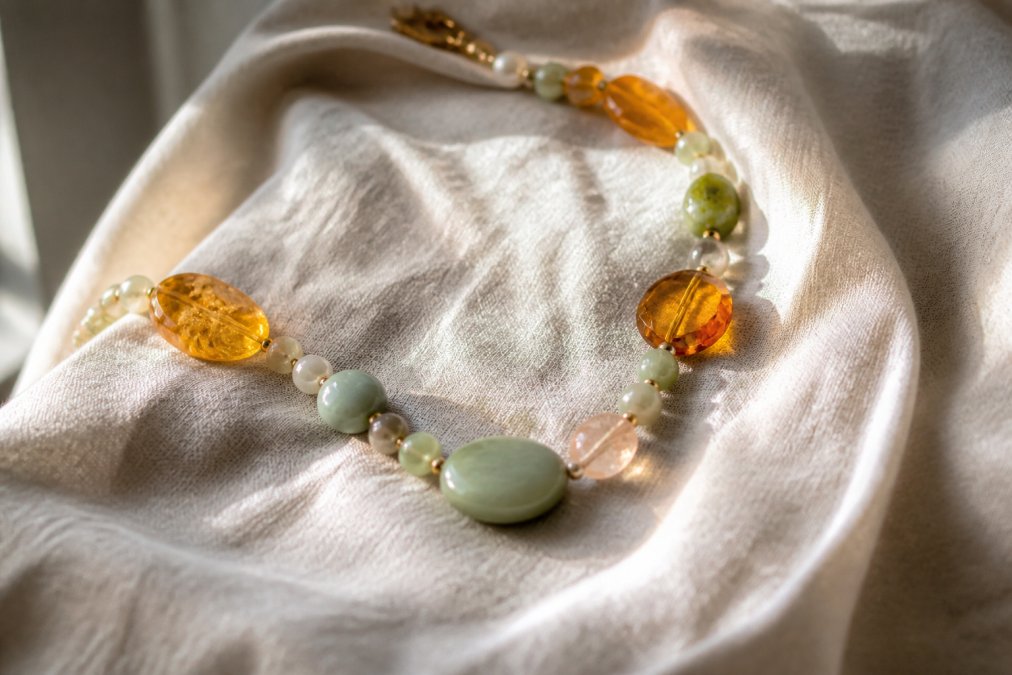
A thoughtful starting point is a piece built from vintage and genuine gemstone components, such as [the Old Soul necklace](https://chouxfleurdesigns.com.au/products/old-soul), where mismatched beads from different eras are gathered onto a single strand. It is the concept of the modern heirloom made literal: no two alike, and each one carrying its own history forward.

The real challenge with modern heirlooms is not finding them; it is resisting the fast, disposable purchases that crowd them out of your jewellery box. Building a collection that lasts takes patience and a good eye, and it helps to start with a maker who already works that way. Choux Fleur Designs creates small-batch, one-of-a-kind gemstone jewellery, handcrafted in Australia with no mass production and no repetition, so every piece is designed to be worn every day and kept forever. Explore the collection and find the piece that starts your heirloom story.
Frequently Asked Questions
What is modern heirloom jewelry?
Modern heirloom jewellery is a contemporary piece made with the intention of being worn daily and passed down. It combines artisan-crafted quality, durable materials, and timeless design. Unlike traditional heirlooms inherited from ancestors, modern heirlooms are chosen new and built to last for generations.
How does handcrafted jewellery differ from mass-produced items?
Handcrafted jewellery is made in small batches or one-of-a-kind, with attention to material quality and construction. Mass-produced pieces are replicated in large volumes, often using lower-cost materials and less durable finishes. Handcrafted pieces typically have unique variations and are made to be repaired and kept, not replaced.
How do you care for modern heirloom pieces to ensure they last?
Store your gemstone jewellery separately in a soft pouch or lined box to avoid scratches. Keep it away from perfumes, lotions, and harsh chemicals. Clean gently with a soft cloth and mild soapy water, then dry thoroughly. For vintage or delicate beads, avoid ultrasonic cleaners. Regular gentle care preserves colour and structure for decades.
Why is small-batch jewellery considered a better investment?
Small-batch jewellery is made with higher-quality materials and closer attention to detail, which means it resists wear better than mass-produced alternatives. Its limited production also gives it rarity and a unique story. When you buy a small-batch piece, you are investing in craftsmanship that holds aesthetic and emotional value over time.