

Durability of Handcrafted Gemstone Jewelry Pieces
Table of Contents
- What Makes Handcrafted Gemstone Jewelry Durable
- Gemstone Hardness and Toughness: What Actually Decides Wear
- Durable Gemstones for Everyday Wear: A Practical Comparison
- Jewellery Setting Durability: How Construction Protects the Stone
- How to Care for Gemstone Jewellery So It Lasts
- How to Inspect a Handcrafted Piece Before You Buy
- Repairs, Maintenance and the Long Life of a Handmade Piece
- Conclusion
- Frequently Asked Questions
Last Updated: October 15, 2026
What Makes Handcrafted Gemstone Jewelry Durable
Durability of handcrafted gemstone jewelry comes down to three things: the stone, the setting, and the metal. A piece fails when any one is weak; get all three right and it can outlast the wearer.
At Choux Fleur Designs, we hand-string every piece in small batches, choosing each stone and clasp ourselves.
So what separates a piece that lasts decades from one that loses a stone in a month? Hardness, toughness, setting construction, and daily habits.
Gemstone Hardness and Toughness: What Actually Decides Wear
Gemstone hardness and toughness measure two different things, and confusing them is the most common buyer mistake. Hardness resists scratches; toughness resists chipping.
Hardness, Toughness and Stability Are Three Different Things
The Mohs hardness scale ranks minerals from 1 (talc) to 10 (diamond) by scratch resistance.
Toughness is separate: diamond is the hardest mineral on earth yet has cleavage planes and can crack under a sharp blow.
Stability is the third factor. Some stones fade in sunlight, react to perfume, or change colour with heat. Stability decides how a stone ages, not how it resists damage.
Cleavage, Fracture and Everyday Impact
Cleavage describes how a mineral breaks along flat planes when struck. Fracture describes how it breaks when no plane exists. Stones with perfect cleavage, like topaz, split cleanly with one sharp knock.
Judging a stone by hardness alone is a mistake: a soft but tough stone often outlasts a hard but brittle one.
Durable Gemstones for Everyday Wear: A Practical Comparison
The best durable gemstones for everyday wear sit at Mohs 7 or above, or have no pronounced cleavage.
Here is how the common stones compare, with the form each one actually suits.
| Gemstone | Mohs Hardness | Toughness | Cleavage | Best Form |
|---|---|---|---|---|
| Diamond | 10 | Good, but cleaves | Perfect (four planes) | Rings, but avoid sharp corner settings |
| Sapphire | 9 | Excellent | None | Rings, bracelets, daily wear |
| Ruby | 9 | Excellent | None | Rings, pendants |
| Quartz | 7 | Good | None | Necklaces, earrings, bracelets |
| Amethyst | 7 | Good | None | Necklaces, earrings |
| Garnet | 6.5-7.5 | Fair to good | None | Pendants, earrings |
| Opal | 5.5-6.5 | Poor | None (but brittle) | Occasional wear, protected settings |
| Pearl | 2.5-4.5 | Poor | None | Occasional wear, earrings, strands |
Quartz, amethyst, and garnet are the workhorses of handcrafted gemstone jewelry: they take knocks, resist scratches, and hold colour for years. A quartz pendant worn daily for a decade typically shows less wear than a diamond ring worn daily, because the pendant never meets impact.
Why the Same Stone Behaves Differently by Jewellery Form
Exposure to impact and abrasion varies enormously by form:
- Rings take the most punishment. They sit on the hand, which most often strikes hard surfaces, and high-profile settings catch on clothing and door frames.
- Bracelets swing and knock against desks, keyboards, and each other; one worn beside a watch abrades against the case thousands of times a year.
- Necklaces hang protected, but pendants can swing into table edges, and clasps meet hair, perfume, and repeated opening and closing.
A practical rule: the more a piece moves and meets hard surfaces, the tougher the stone and the more protective the setting need to be. A soft stone in a pendant is reasonable; in a daily-worn ring it is a repair waiting to happen.
Matching Stone to Form Without Giving Up Beauty
Opals and pearls need gentler handling, put opal in a pendant or stud earrings rather than a ring, and choose pearl earrings or a strand worn over clothing rather than a bracelet that knocks against a desk.
For rings, sapphire and ruby stand out: high hardness, excellent toughness, no cleavage. They resist scratching and chipping, which is why they are the traditional choice for everyday engagement rings.
A Note on Cut and Setting Exposure
A stone's cut changes its risk profile.
Protective settings compensate: a bezel wrapping the girdle shields edges and points, while a well-designed prong setting can guard vulnerable corners. For daily wear, check how much of the stone's edge is exposed.
Handcrafted work has an advantage here: a maker can adjust the setting to the specific stone rather than forcing it into a standard cast mount.
Jewellery Setting Durability: How Construction Protects the Stone
Jewellery setting durability decides whether a stone stays put. A flawless gem in a loose setting is a gem you will lose, and construction is where handcrafted pieces usually beat mass-produced ones.
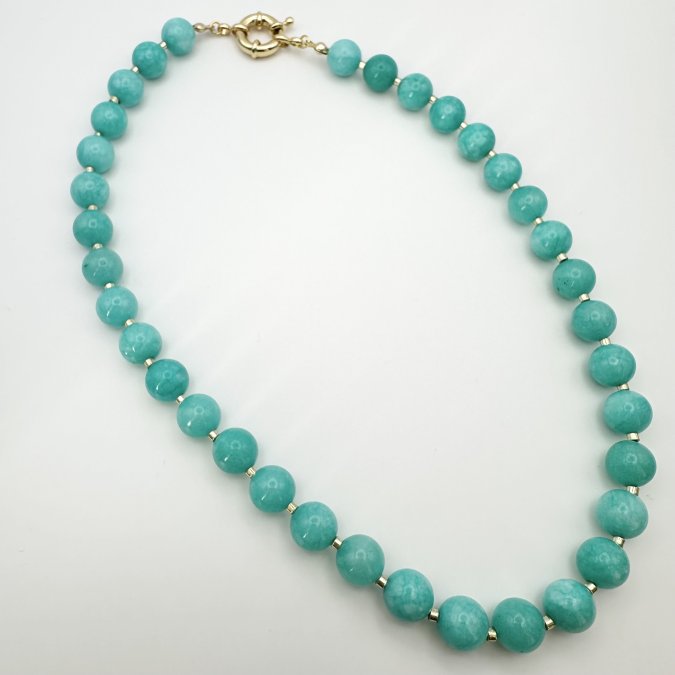
Prongs, Bezels and Stone Security
Prongs hold a stone with small metal claws, showing more of the gem but catching on fabric and bending over time. Bezels wrap metal around the stone's edge, offering far better protection for everyday wear.
For necklaces and bracelets that take constant contact, a bezel or a well-seated prong setting is the safer choice. Ask how many prongs hold the stone. Four is the minimum for security.
Metals, Clasps and Finish Quality
Sterling silver (925 silver) and 14-karat gold are the two metals you will see most in handcrafted work; both hold up well with enough metal thickness.
Clasps fail more often than stones do. A lobster clasp or bolt clasp in solid metal outlasts a cheap spring-ring, check it closes firmly and does not twist.

Finish matters too. A polished surface resists dirt build-up. Rough edges catch on clothing and wear faster.
How to Care for Gemstone Jewellery So It Lasts
How to care for gemstone jewellery starts with one rule: keep it dry and keep it separate. Most damage comes from chemicals and contact with other pieces, not from wearing the piece. But care must also be matched to the stone, a routine that keeps quartz looking new can ruin an opal or a pearl.
A simple baseline routine for any piece:
- Put jewelry on last, after perfume and lotion have dried
- Take it off before showering, swimming, or cleaning
- Wipe with a soft cloth after each wear
- Store each piece in its own pouch or compartment
That baseline is the floor, not the ceiling. Here is how care differs by stone type.
Cleaning by Stone Type
Diamond tolerates ultrasonic and steam cleaning, but its cleavage planes mean it should never be struck.
Opal is the stone most often damaged by well-meaning cleaning.
Pearl is soft, porous, and sensitive to chemicals. Never soak pearls or use ultrasonic cleaners, and keep them away from hairspray, perfume, cosmetics, and household cleaners.
Emerald is typically treated with oil or resin to fill surface-reaching fractures, and those treatments can be damaged by heat, steam, and ultrasonic cleaning.
Storage and Exposure Risks by Stone
Storage is where most avoidable damage happens: stones stored loose scratch each other, and a diamond will scratch every other stone it touches. Keep one piece per compartment or pouch.
Exposure risks also vary:
- Sunlight can fade amethyst, rose quartz, and some treated stones over long periods. Store these away from a sunny windowsill.
- Heat can damage opal, emerald, and any heat-sensitive treated stone.
- Chemicals, chlorine, ammonia, hair dye, and some sunscreens, can damage pearls, opals, and treated stones. Remove jewellery before swimming in a chlorinated pool.
- Moisture can degrade the string or wire in beaded pieces and tarnish sterling silver; keep pieces dry and store silver in a tarnish-resistant pouch.
A Quick Reference
| Stone | Safe Cleaning | Avoid |
|---|---|---|
| Quartz, amethyst, garnet | Mild soap, soft brush, lukewarm water | Sudden temperature change |
| Sapphire, ruby | Ultrasonic (if setting is sound), mild soap | Loose prongs |
| Diamond | Ultrasonic, steam, mild soap | Sharp blows |
| Opal | Soft damp cloth only | Ultrasonic, soaking, heat, dryness |
| Pearl | Soft damp cloth, wear often | Soaking, chemicals, ultrasonic |
| Emerald | Soft damp cloth only | Heat, steam, ultrasonic, chemicals |
The Gemological Institute of America's gem care guidance recommends matching your cleaning method to the specific stone, not applying one routine to everything. That single principle prevents most of the damage people accidentally cause to their own jewellery.
How to Inspect a Handcrafted Piece Before You Buy
Inspecting a piece before you buy takes five minutes and saves years of regret; most buyers skip it and only notice a loose setting after a stone is gone.
Run through this checklist:
- Check each prong sits flush against the stone
- Look for gaps between the stone and its setting
- Test the clasp several times, listening for a firm click
- Run a finger along the edges for rough or sharp spots
For online purchases, ask for close-up photos of the setting and the clasp. A maker who stands behind their work will send them without hesitation.
If you want a piece you can inspect with confidence, our Old Soul necklace is finished with a 14K gold plated bolt clasp, a fitting chosen for security over decoration.
Repairs, Maintenance and the Long Life of a Handmade Piece
Repairability is the durability factor almost nobody talks about.
Annual checks make a real difference: inspect prongs, check the string or wire on beaded pieces, and replace worn clasps before they fail.
[Our Mabel necklace carries its own care instructions](/products/mabel) for exactly this reason: keep it dry, apply perfume first, store it away from sunlight, and wipe it gently after wear.

Conclusion
The real challenge with gemstone jewelry is not finding something beautiful, but something that still looks right after years of daily wear, which comes down to stone choice, setting construction, and a little care.
At Choux Fleur Designs, every piece is handcrafted in Australia in small batches, with hand-selected materials and no mass production. Our one-of-a-kind pieces are designed to be worn every day and kept forever, from the Blythe necklace at $69.95 to the Mosaic necklace at $79.95.

Frequently Asked Questions
How durable is handcrafted gemstone jewelry?
Durability depends on the stone, the setting and the metal, not on whether a piece is handmade. A well-made handcrafted piece uses hand-selected materials and secure settings, so it can handle daily wear with basic care. Gemstone jewelry made from stones with good hardness and toughness, such as quartz-family gems, paired with a proper clasp and finish, will hold up far better than a piece with loose prongs or thin metal. Regular inspection and gentle cleaning extend its life.
Which gemstones are durable enough for everyday wear?
For everyday wear, look for durable gemstones with a Mohs hardness of 7 or above, such as quartz varieties, and reasonable toughness. Stones like amethyst, smoky quartz, rose quartz and garnet work well in necklaces and earrings where impact is limited. Softer or heavily cleaved stones are better saved for occasional wear. The setting matters too: a bezel or protected prong setting reduces the chance of chips, even on a stone that is not the hardest.
Are handcrafted gemstone pieces more durable than mass-produced jewelry?
Not automatically, but handcrafted pieces often have an edge because the maker selects each stone, checks the setting and finishes the metal by hand. Mass-produced jewelry can use thinner metal, weaker clasps and poorly set stones. A handcrafted piece from a small-batch maker is also easier to repair, since the construction is usually more considered. The key is to inspect the setting, clasp and finish before buying, whether the piece is handmade or not.
How should I care for gemstone jewelry to help it last?
Keep gemstone jewelry dry: remove it before showering, swimming or bathing. Apply perfume and lotion before putting it on, not after. Store pieces in a dry place away from direct sunlight, and wipe them gently with a soft cloth after each wear. Check prongs and clasps every few months, and have any loose stone tightened promptly. These habits protect the stone's surface and keep the setting secure over years of wear.