

How to Clean Gemstone Jewellery Safely
Table of Contents
- What You'll Need Before You Start
- Step-by-Step: How to Clean Gemstone Jewellery Safely
- Best Jewellery Cleaning Solution for Gemstones
- How to Clean Opal Jewellery Safely
- Ultrasonic Jewellery Cleaner Risks and When to Use Them
- Safety Precautions for Specific Gemstones
- When to Seek Professional Cleaning
- Drying, Storage, and Maintenance Tips
- Frequently Asked Questions
Last Updated: September 26, 2026
What You'll Need Before You Start
Before you clean your gemstone jewellery, gather the right materials. You'll need mild dish soap, warm water, and a soft-bristled toothbrush. A lint-free cloth is essential for drying without leaving residue behind.
You'll also want a small bowl or cup for soaking. Some people prefer a dedicated jewellery cleaning station to keep everything organised. Pat dry with the lint-free cloth to prevent water spots.
Here's what to have on hand:
- Mild dish soap (not harsh detergents)
- Warm water (not hot)
- Soft-bristled toothbrush
- Lint-free cloth
- Small bowl for soaking
- Optional: ultrasonic cleaner (use with caution)
Keeping these supplies together in one place makes the cleaning process faster and more consistent. It also helps you avoid using harsh chemicals by accident.
Step-by-Step: How to Clean Gemstone Jewellery Safely
Cleaning your gemstone jewellery safely follows a straightforward process. The key is using gentle methods that won't damage delicate stones or settings. Most pieces can be cleaned at home with basic supplies.
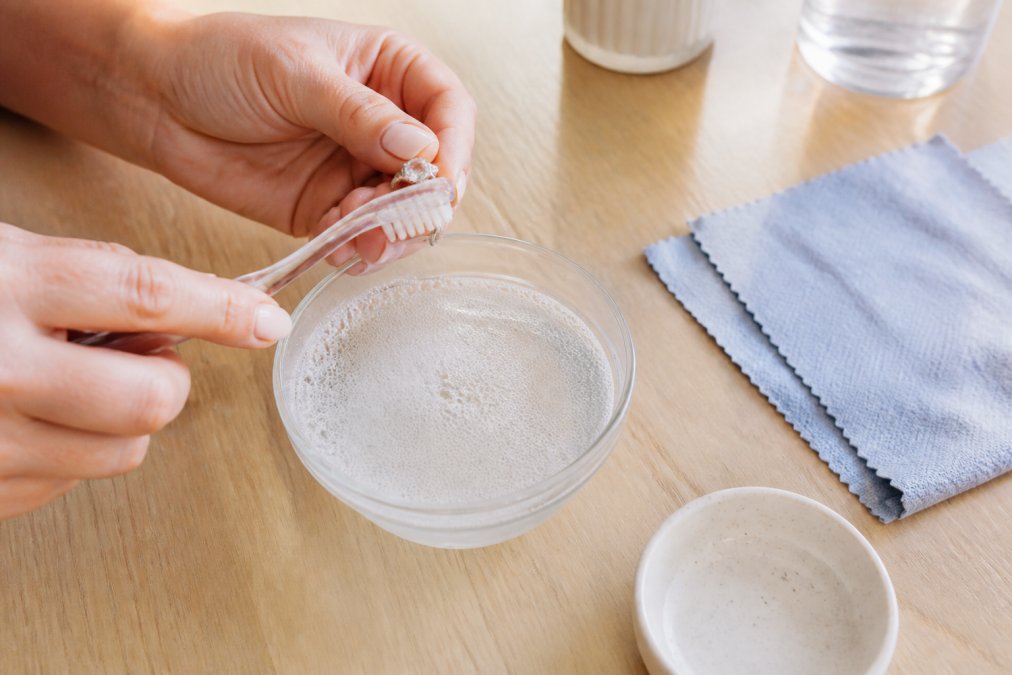
Step 1: Prepare Your Cleaning Station
Start by setting up a clean, flat surface where you can work safely. Choose a spot away from the sink drain so you won't accidentally lose your jewellery. Lay out all your supplies within reach.
Fill your bowl with warm water. Add a small drop of mild dish soap. Stir gently to mix. The water should feel warm but not hot to your touch. Hot water can damage some gemstones and loosen settings.
Keep your lint-free cloth nearby. You'll use it at the end to dry your pieces completely.
Step 2: Soak Your Jewellery
Place your gemstone jewellery in the warm soapy water. Let it soak for 5-10 minutes. This loosens dirt, oil, and build-up on the surface.
Don't soak for longer than 15 minutes. Some gemstones absorb water, which can cause damage over time. Keep the soaking time short and consistent.
If you're cleaning multiple pieces, you can soak them together. Just make sure they don't rub against each other during soaking.
Step 3: Gently Clean with a Soft Brush
Remove one piece from the water. Use your soft-bristled toothbrush to gently scrub the surface. Focus on the areas around the setting where gunk tends to build up.
Brush in circular motions. Don't scrub hard. Let the brush do the work with light pressure.
Pay special attention to:
- The base of the stone where it meets the setting
- Underneath prong settings
- Crevices and carved details
- The back of the stone
Work slowly and carefully. A few extra seconds of gentle cleaning beats aggressive scrubbing that might scratch the stone or loosen the setting.
Step 4: Rinse Thoroughly
Hold the piece under running water. Rinse away all soap residue. Make sure no soapy water remains on the stone or metal.
Use lukewarm water, not hot. Let the water run over the jewellery for 10-15 seconds. Rotate the piece so water reaches all surfaces.
Some people prefer to rinse over a strainer to catch the jewellery. This prevents accidental drops down the drain.
Step 5: Pat Dry and Inspect
Place the piece on your lint-free cloth. Pat it dry gently. Don't rub hard, as this can leave lint behind.
Once dry, inspect the jewellery closely. Look for any remaining residue or dullness. Check the setting to make sure it's still secure. If the stone moves or the prongs feel loose, stop and seek professional help.
Your gemstone jewellery should now look bright and clean.
Best Jewellery Cleaning Solution for Gemstones
The safest cleaning solution for gemstone jewellery is mild dish soap and warm water. This combination works for most gemstones and settings without causing damage.
Never use:
- Bleach or chlorine-based cleaners
- Ammonia or window cleaners
- Abrasive powders or scouring pads
- Vinegar or acidic solutions
- Alcohol or acetone
How to Clean Opal Jewellery Safely
Opals require special care because they're porous gemstones. Water can seep inside and cause the stone to crack or lose its colour. This makes opal jewellery one of the most delicate types to clean.
For opal jewellery:
- Use a barely damp cloth, not soaking water
- Wipe gently in one direction
- Dry immediately with a separate dry cloth
- Avoid ultrasonic cleaners completely
- Never use steam cleaners
- Keep opals away from perfume and lotions
Ultrasonic Jewellery Cleaner Risks and When to Use Them
Ultrasonic cleaners use sound waves to vibrate dirt away from jewellery. They're fast and effective for some pieces, but they carry real risks for gemstone jewellery.
Safe gemstones for ultrasonic cleaning:
- Diamond
- Sapphire
- Ruby
- Topaz
- Emerald (with caution)
Unsafe gemstones for ultrasonic cleaning:
- Opal
- Pearl
- Turquoise
- Amber
- Tanzanite
- Moonstone
- Any porous or soft stone
Safety Precautions for Specific Gemstones
Different gemstones have different vulnerability levels. Understanding your stone's properties, particularly its hardness and porosity, helps you clean it safely without guesswork.
Understanding Gemstone Hardness: The Mohs Scale
The Mohs hardness scale ranks minerals from 1 (softest) to 10 (hardest) (Mohs Hardness Scale). This scale is the most reliable way to predict how a gemstone will respond to cleaning methods.
Mohs 8-10 (Very Hard, Durable for Standard Cleaning):
- Diamond (10)
- Sapphire and Ruby (9)
- Topaz (8)
Mohs 7-7.5 (Moderately Hard, Requires Caution):
- Emerald (7.5, but often treated with oils)
- Quartz varieties including Amethyst and Citrine (7)
Mohs 6-6.5 (Moderately Soft, Minimal Water Exposure):
- Turquoise (5-6)
- Opal (5.5-6.5)
- Tanzanite (6-6.5)
- Moonstone (6-6.5)
Mohs Below 6 (Soft, Delicate):
- Pearl (2.5-4.5)
- Amber (2-2.5)
Porosity and Water Sensitivity
Hardness alone doesn't determine safety. Porosity, whether a stone absorbs liquids, is equally important.
Quick Reference: Gemstone Cleaning Compatibility
| Gemstone | Mohs | Porous? | Safe Methods | Avoid |
|---|---|---|---|---|
| Diamond | 10 | No | Warm soapy water, soft brush, ultrasonic (with care) | Harsh chemicals |
| Sapphire/Ruby | 9 | No | Warm soapy water, soft brush | Ultrasonic if setting is delicate |
| Topaz | 8 | No | Warm soapy water, soft brush | Prolonged heat exposure |
| Emerald | 7.5 | No* | Barely damp cloth, 5-min soak max | Ultrasonic, prolonged soaking |
| Quartz | 7 | No | Warm soapy water, soft brush | Extreme heat |
| Tanzanite | 6-6.5 | Yes | Barely damp cloth only | Water, heat, ultrasonic, steam |
| Turquoise | 5-6 | Yes | Barely damp cloth only | Water, ultrasonic, perfume, lotions |
| Opal | 5.5-6.5 | Yes | Barely damp cloth only | Water, heat, ultrasonic, steam |
| Pearl | 2.5-4.5 | Yes | Barely damp cloth only | Water, ultrasonic, perfume, cosmetics |
| Amber | 2-2.5 | Yes | Barely damp cloth only | Water, heat, solvents |
*Emeralds are treated with oils or resins, making them functionally porous.
When in Doubt
If you don't know your gemstone's type or hardness, assume it's delicate and use the barely damp cloth method. This approach protects even the most sensitive stones. Once you've identified your stone using a jeweller's reference or professional appraisal, you can confidently choose the safest cleaning method.
When to Seek Professional Cleaning
Some situations call for professional help. Recognise when home cleaning isn't enough or when the risk is too high.
Take your gemstone jewellery to a professional if:
- The setting feels loose or unstable
- The stone has visible chips or cracks
- You're unsure what type of gemstone it is
- The piece has intricate carving or delicate details
- The stone is set in vintage or antique metal
- You notice cloudiness that won't come clean
- The jewellery hasn't been cleaned in years and has heavy build-up
Drying, Storage, and Maintenance Tips
How you dry and store your gemstone jewellery matters as much as how you clean it. Proper care extends the life of your pieces.
Remove your gemstone jewellery before:
- Exercising or playing sports
- Swimming or bathing
- Doing housework or yard work
- Applying lotions, perfume, or cosmetics
Frequently Asked Questions
What is the best way to clean gemstone jewellery at home?
Mix warm water with a few drops of mild dish soap in a bowl. Soak your jewellery for 15-20 minutes, then use a soft-bristled toothbrush to gently dislodge build-up around prong settings and stone edges. Rinse thoroughly under running water and pat dry with a lint-free cloth. Avoid hot water and abrasive materials, which can damage delicate stones and their settings. For handcrafted pieces, this gentle method preserves both the gemstones and the artisanal metalwork.
Can I use ultrasonic cleaners for all gemstone jewellery?
No. Ultrasonic cleaners use high-frequency vibrations that can crack porous gemstones like opals, pearls, turquoise, and organic gems. They may also loosen prong settings if the jewellery is delicate or handcrafted. Stick to ultrasonic cleaners only for non-porous, durable stones like diamonds and sapphires, and even then, check your jewellery's condition first. When in doubt, hand-clean using mild dish soap and warm water instead.
How often should I clean my gemstone jewellery?
Clean jewellery every 1-2 weeks if you wear it daily, or as soon as you notice dullness, tarnish, or gunk beneath settings. More frequent cleaning maintains luster and clarity, especially for pieces with intricate designs or delicate settings. Handcrafted gemstone jewellery benefits from regular gentle cleaning to keep both the stones and the metalwork looking their best.
Which household items should I avoid when cleaning delicate gemstones?
Avoid chlorine bleach, vinegar, alcohol, acetone, and commercial jewellery cleaners unless they are specifically labelled nontoxic and safe for your stone type. Never use abrasive scrubbers, hard toothbrushes, or toothpaste. Steer clear of steam cleaners and hot water, which can cause thermal shock and crack gemstones. For porous stones like opals and pearls, avoid prolonged soaking and any chemical exposure. Stick to mild dish soap, warm water, and a soft-bristled toothbrush for safe, effective cleaning.
Caring for your gemstone jewellery properly keeps it looking beautiful for decades. The safe, gentle cleaning methods covered here work for most pieces. When you invest in handcrafted gemstone jewellery like those from Choux Fleur Designs, proper maintenance becomes part of the ownership experience. Start with the basics: mild soap, warm water, and a soft touch. Your pieces will reward you with lasting brilliance and beauty.