

Is Handmade Jewellery Worth the Price?
Table of Contents
- What You're Actually Paying For When You Buy Handmade Jewellery
- Handmade Jewellery vs Mass-Produced Jewellery: The Real Differences
- How to Tell if Handmade Jewellery Is Good Quality
- Handmade Jewellery Pricing Factors That Affect Cost
- Handmade Gemstone Jewellery: Durability and Longevity
- Investment Value: Resale and Personal Worth
- Is Handmade Jewellery Worth It? A Practical Framework
- Frequently Asked Questions
Last Updated: October 9, 2026
What You're Actually Paying For When You Buy Handmade Jewellery
When you invest in handmade jewellery, is handmade jewellery worth price truly justified? The answer depends entirely on understanding what goes into each piece.
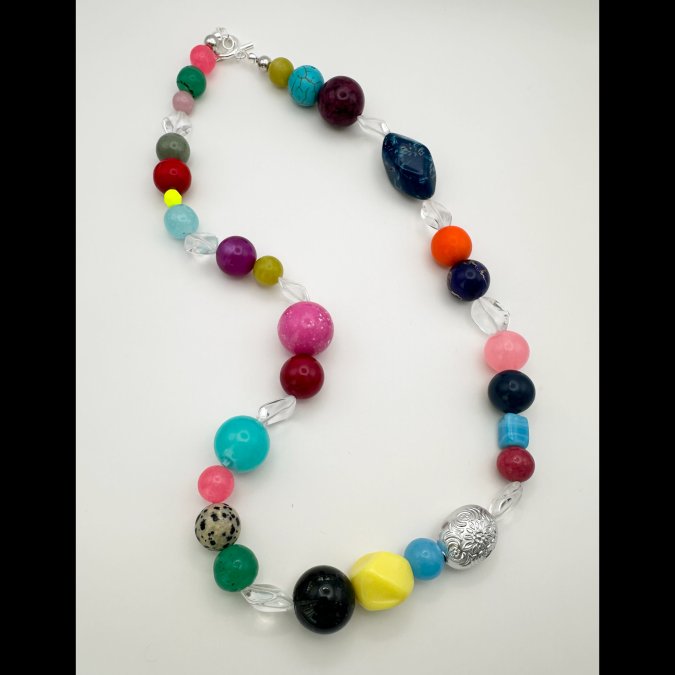
The price covers more than materials: the maker's skill, hours sourcing authentic gemstones, meticulous hand-finishing, and the overhead of a sustainable creative practice.
Labour and time investment
Handmade jewellery demands time mass production cannot match.
Each stage requires focused attention. Hand-knotting pearls, for instance, requires steady hands and precision, with no shortcut.
When you purchase a handmade necklace like our Lune, you pay for the maker's time to hand-knot each pearl on silk thread, separating them for security and beauty.
Materials and sourcing
Quality materials represent a substantial portion of handmade jewellery costs.
Gold findings, clasps, and spacers add to material costs, especially with 14k gold or gold-filled options rather than cheaper plating.
Material selection also reflects the maker's commitment to quality: handmade jewellery makers choose materials that age beautifully and withstand daily wear, not materials chosen purely for profit margin.
Quality control and finishing
Mass production relies on statistical quality control, accepting that a percentage of items will have defects.
This meticulous finishing, smoothing rough edges, ensuring clasps function flawlessly, polishing each stone, takes time but ensures the piece performs and looks beautiful for years. A rushed finish creates problems later; a thoughtful finish prevents them.
Handmade Jewellery vs Mass-Produced Jewellery: The Real Differences
The distinction between handmade and mass-produced jewellery extends beyond price: production methods, design philosophy, and expected lifespan differ fundamentally. Understanding these differences clarifies why handmade pieces command higher prices and often deliver better long-term value.
Production methods and scale
Mass-produced jewellery is manufactured in high volume using machines and assembly lines.
Handmade jewellery operates at the opposite end: a maker might produce 10 to 20 pieces monthly, each unique or semi-custom.
This fundamental difference explains pricing. Mass production achieves efficiency through repetition and volume. Handmade production achieves quality through individual attention and skilled labour.
Uniqueness and customisation
Every mass-produced piece is identical to thousands of others, manufactured to the same specification. Consistency appeals to many buyers, but it means zero uniqueness.
Handmade jewellery is inherently unique. Even across pieces in a similar style, variations in stone selection, colour, and hand-finishing make each one-of-a-kind. [Our Blythe necklace exemplifies this](/products/blythe): each features mixed genuine gemstone beads in similar colour families, but no two pieces are identical because no two stones are identical.

This uniqueness carries real value: a one-of-a-kind piece becomes a personal statement rather than a fashion item, appealing to people who value individuality.
Longevity and wear
Mass-produced jewellery often uses cheaper materials and assembly shortcuts that compromise longevity: thin plating wears through, weak clasps fail, and hastily set stones loosen.
Handmade jewellery made with quality materials and careful finishing lasts significantly longer. Our Old Soul necklace uses vintage beads finished with a 14k gold-plated bolt clasp, chosen to withstand years of daily wear.

Longevity affects true cost: a mass-produced necklace at a lower initial price that fails after two years costs more over time than a handmade piece at a higher price that lasts 20 years.
How to Tell if Handmade Jewellery Is Good Quality
Not all handmade jewellery is created equal. Some makers prioritise aesthetics over durability. Others cut corners on materials to maintain lower prices. Learning to assess quality helps you distinguish genuine craftsmanship from pieces that simply claim to be handmade.
Examine the construction and finishing
Inspect the clasp first: does it open and close smoothly and feel secure?
Look at stone settings: do stones stay secure when gently pressed? Loose stones indicate rushed setting. Examine the back of the piece, too.
Check for rough edges, uneven spacing, or inconsistent finishing, which suggest rushed production or lack of skill. Quality handmade pieces show consistent attention to detail throughout.
Verify materials and hallmarks
Ask directly about materials.
For gold, look for hallmarks indicating 14k, 18k, or gold-filled. Avoid pieces marked only as "gold plated", plating wears through relatively quickly with daily wear.
Ask about stone treatment: are stones natural, treated, or synthetic? Transparency about materials indicates a maker confident in their choices.
Ask about the maker's process
Quality makers are happy to explain their process: how long a piece takes to create, how they source stones, what quality standards they maintain, and whether they offer care instructions and aftercare support.
A maker who can articulate their process demonstrates expertise and intentionality, understanding their work and standing behind it. Makers who are vague or defensive may be cutting corners.
Handmade Jewellery Pricing Factors That Affect Cost
Several factors influence handmade jewellery pricing. Understanding them helps you assess whether a piece represents fair value for the materials and labour involved.
Material grade and sourcing
Higher-grade gemstones cost significantly more than lower grades: a high-clarity, vibrant amethyst costs more than a pale, included one. Makers who source premium stones and invest time in careful selection price accordingly.
Ethical sourcing also affects cost. Stones sourced through transparent, fair-trade channels cost more than stones from questionable sources. Makers committed to ethical production absorb these higher material costs.
Maker experience and reputation
Experienced makers command higher prices because their work is proven durable and beautiful, with efficient processes that maintain quality while managing costs.
Emerging makers may charge less while building a reputation, which can be good value if their work is genuinely high-quality. Established makers' higher prices often reflect years of refinement and proven longevity.
Complexity and customisation
Simple designs cost less than complex ones: a single-strand necklace takes less time than a multi-component piece with intricate finishing. Customisation requires additional design time and may involve sourcing specific stones.
[Our Equinox necklace, featuring six gemstones](/products/equinox) flowing from black onyx through carnelian, amber, dalmatian jasper, olive jade, and tiger's eye, reflects this complexity.

| Pricing Factor | Impact on Cost | Why It Matters |
|---|---|---|
| Material grade | High | Premium stones cost more but age beautifully |
| Gold quality | Moderate | 14k gold lasts longer than plating |
| Maker experience | High | Proven quality commands premium pricing |
| Design complexity | Moderate | Intricate pieces require more labour |
| Ethical sourcing | Moderate | Fair-trade materials cost more upfront |
| Customisation | High | Bespoke design adds significant labour time |
Handmade Gemstone Jewellery: Durability and Longevity
Handmade gemstone jewellery made with quality materials and proper techniques is designed to last decades. Understanding stone durability and proper care extends its lifespan significantly.
Stone hardness and setting security
Gemstones have different hardness levels.
Setting security matters as much as hardness: a soft stone set securely outlasts a hard stone set poorly.
[Our Mosaic necklace combines gemstones](/products/mosaic) of varying hardness, finished with polished 14k gold findings. Secure hand-stringing and quality gold findings ensure it withstands daily wear.
Proper care extends lifespan
Handmade gemstone jewellery requires basic care.
Clean gently with a soft, dry cloth and avoid harsh chemicals or ultrasonic cleaners, which can damage delicate settings or soften adhesives.
Proper care transforms a handmade necklace into a lasting heirloom, worn and cherished for decades and passed down to the next generation. This longevity is where handmade jewellery delivers exceptional value.
Investment Value: Resale and Personal Worth
When considering whether handmade jewellery is worth the price, many buyers wonder about resale value. The answer is nuanced: handmade jewellery rarely appreciates financially, but it often retains personal worth far exceeding its initial cost.
Resale value versus emotional value
Most handmade jewellery does not resell for its original price. A necklace bought for $80 might resell for $30 to $50, depending on condition, desirability, and market demand.
Personal value, however, often exceeds resale value dramatically. A one-of-a-kind piece worn daily becomes woven into your personal narrative, marking occasions and connecting you to the maker's artistry.
One-of-a-kind pieces and collector appeal
Some handmade pieces develop collector appeal, particularly work by established makers or pieces with rare stones.
This should not be the primary consideration, though. Buy because you love the piece, because it reflects your aesthetic, because you plan to wear it regularly. If collector value develops, that is a bonus, not the purpose.
Is Handmade Jewellery Worth It? A Practical Framework
After examining materials, labour, durability, and value, the question remains: is handmade jewellery worth price for you specifically? It depends on your priorities and how you plan to wear the piece.
When handmade makes sense
Handmade jewellery makes sense when you prioritise uniqueness, durability, and intentional design.
It also makes sense when you value supporting independent makers and artisans: if ethical production and fair compensation matter to you, small-batch handmade pieces align with your values.
Finally, handmade jewellery makes sense when you want a piece that feels personal. A one-of-a-kind necklace becomes an extension of your identity rather than a generic fashion item.
Questions to ask before you buy
Before investing in a handmade piece, ask yourself:
- Will I wear this regularly, or is it a special-occasion piece? Daily wear justifies higher investment.
- Do I love the design, or am I buying because it is handmade?
- Can I care for it properly? Handmade jewellery requires basic maintenance.
- Does the maker provide clear information about materials and process?
- Am I comfortable with slight variations? Handmade pieces vary slightly from photos.
- Do I understand what I am paying for? If the price seems unjustified after learning about materials and labour, it may not be the right piece.
These questions help you decide based on your actual needs and values rather than price alone.
Is handmade jewellery worth the price? Our small-batch gemstone pieces like Blythe and Equinox combine genuine gemstones, 14k gold findings, and meticulous hand-finishing to create jewellery that lasts.
Frequently Asked Questions
What makes handmade jewellery more expensive than mass-produced jewellery?
Handmade jewellery costs more because each piece is individually crafted, not manufactured at scale. The maker invests significant labour hours, sources higher-quality materials, and applies hand-finishing techniques that mass production skips. Materials like 14K gold findings and genuine gemstones add genuine cost. There's also no economy of scale, a maker producing 50 pieces yearly pays proportionally more per item than a factory producing 50,000. This labour, material quality, and individual attention justify the higher price.
Is handmade gemstone jewellery more durable than mass-produced jewellery?
Handmade gemstone jewellery can be more durable, but only if it's well-made. Quality depends on the maker's skill and material choices, not the method alone. A well-constructed handmade piece with secure stone settings and quality gold or silver will outlast cheaply mass-produced jewellery. However, poor handmade work can fail just as quickly as poor factory work. The difference is that artisan makers typically inspect each piece individually and stand behind their work, whereas mass-produced items may have quality-control gaps. Ask the maker about their construction methods and warranty.
Does handmade jewellery hold its value?
Handmade jewellery holds value differently than mass-produced pieces. Resale value depends on the maker's reputation, the materials used, and whether the piece appeals to collectors. A necklace from an established artisan with a strong following may retain 40-60% of its purchase price; generic handmade pieces may hold only 20-30%. However, handmade jewellery often gains emotional and personal value over time, it becomes a modern heirloom worn daily and passed down. For most buyers, the real value lies in wearing a unique, well-made piece that reflects their style, not in future resale.
How can you tell if handmade jewellery is actually handmade and not dropshipped?
Ask the maker directly: Where are the pieces made? Can they explain their process? Do they have photos of their studio or work in progress? Genuine artisans welcome these questions and can describe their techniques in detail. Look for inconsistencies, handmade pieces naturally vary slightly from photos, whereas identical listings across multiple sellers suggest dropshipping. Check if the maker offers customisation or bespoke orders, which indicates actual production capability. For handmade gemstone jewellery, ask about stone sourcing and how they select materials. Transparent makers build trust by sharing their story and process.